
Views: 562 Author: Site Editor Publish Time: 2025-12-12 Origin: Site
When choosing a laser level, one of the most searched questions online is “Which is better, red or green laser level?” The reason is simple: consumers want the best visibility, accuracy, and value for their money. Whether they are DIY homeowners, contractors, surveyors, or renovation professionals, the color of the laser line directly influences efficiency and work quality. The debate between red and green lines has existed for years, and in today’s market—where laser technology has improved significantly—understanding the differences is more important than ever.

To explain the differences clearly, we use NORM’s red and green laser levels as baseline references. NORM is known for manufacturing compact, high-stability leveling tools with strong diode performance and wide application suitability. Their red and green models are designed with similar chassis, identical accuracy ratings, and comparable battery systems, making them ideal for an apples-to-apples color comparison.
Red and green lasers differ in three major technical aspects:
Wavelength: Red lasers operate at ~635–650 nm, whereas green lasers operate at ~520–535 nm.
Visibility: The human eye is up to 4× more sensitive to green light, making green lines appear brighter at the same output power.
Energy Efficiency: Green diodes consume 15–30% more power than red diodes due to more complex internal components.
Here is a data snapshot comparing typical performance of NORM red vs. green laser levels:
| Performance Metric | NORM Red Laser Level | NORM Green Laser Level |
|---|---|---|
| Indoor visibility range | 10–20 m | 30–45 m |
| Outdoor visibility (without receiver) | Low | Moderate–High |
| Power consumption | Lower | Slightly higher |
| Battery life | Longer | Shorter (by ~20%) |
| Eye visibility | Good | Excellent |
| Price range | Budget-friendly | Higher cost |
This foundational data helps consumers immediately understand how and why the two laser types differ in real use.
Green lasers outperform red lasers primarily due to visibility. Green wavelengths align with the peak sensitivity of the human eye, making the line appear sharper, thicker, and more stable over distance. For users who frequently work in bright environments or larger rooms, visibility is the biggest reason professionals lean toward green laser levels.
NORM’s green models typically extend visible indoor working distance up to 30–45 meters, creating clear reference lines even when sunlight enters through windows. For tasks such as wall tiling, ceiling drop leveling, lighting installation, and long-distance alignment, this visibility directly improves work speed.

Despite lower brightness, red laser levels remain extremely effective for most indoor tasks. Home DIYers hanging shelves, homeowners installing kitchen cabinets, and renovators aligning frames often work within 10–15 meters indoors. NORM red lasers perform exceptionally well in these conditions while conserving battery power.
Red lasers struggle outdoors without a detector because sunlight washes out the line. Green lasers maintain line integrity better, though even they are affected by full sun. For outdoor construction layouts, green is preferable unless a laser receiver is used.
For typical household projects—installing shelves, aligning picture frames, leveling furniture, or simple remodeling—NORM’s red laser levels offer more than enough accuracy while staying extremely cost-efficient. Because these tasks often happen in controlled lighting, visibility is rarely an issue.
Professionals who work on job sites, large rooms, or commercial spaces should strongly consider NORM’s green laser levels. The increased visible range dramatically improves layout tasks such as ceiling construction, tile setting, drywall installation, and long-distance leveling. The productivity gained typically outweighs the higher cost.
Green laser components require more advanced manufacturing processes, leading to higher retail prices. However, NORM’s pricing strategy keeps green models competitively accessible. For buyers on a tight budget, red lasers remain the most economical option, often costing 25–40% less than green.
Red lasers consume less power, giving users 20–30% longer runtime under identical conditions. For professionals working long days or users in remote areas without frequent charging opportunities, NORM’s red models may reduce downtime.
Some indoor conditions, such as new construction homes without curtains or industrial spaces with reflective metal, are unusually bright. In these cases, green lines from NORM laser levels maintain clarity, allowing workers to continue without stopping to dim lights or adjust their environment.

If your work involves aligning long hallways, installing long cabinets, or leveling roof beams, green lasers outperform red devices significantly. The improved visibility reduces human error and eliminates the need to walk closer to the line repeatedly.
Both red and green NORM models are compact, but red units can run longer per charge, making them ideal for users who prioritize portability and continuous operation.
Red lasers offer slightly better performance in extremely cold conditions—below freezing temperatures—because their diode technology is less sensitive to cooling effects. Green lasers maintain better performance in hot environments. NORM enhances both types with temperature-stabilizing circuits, but these natural tendencies still apply in extreme climates.
Beginners often prefer NORM’s red laser level due to lower cost and longer battery life. It provides all the essential functions without an overwhelming price tag.
Tile and flooring installations demand long, perfectly visible reference lines. Green lasers significantly reduce mistakes and improve precision in these tasks.
Electricians often work in large commercial rooms or bright workplaces. They benefit heavily from the stronger visibility of green laser lines when laying conduits, cable trays, or ceiling grids.
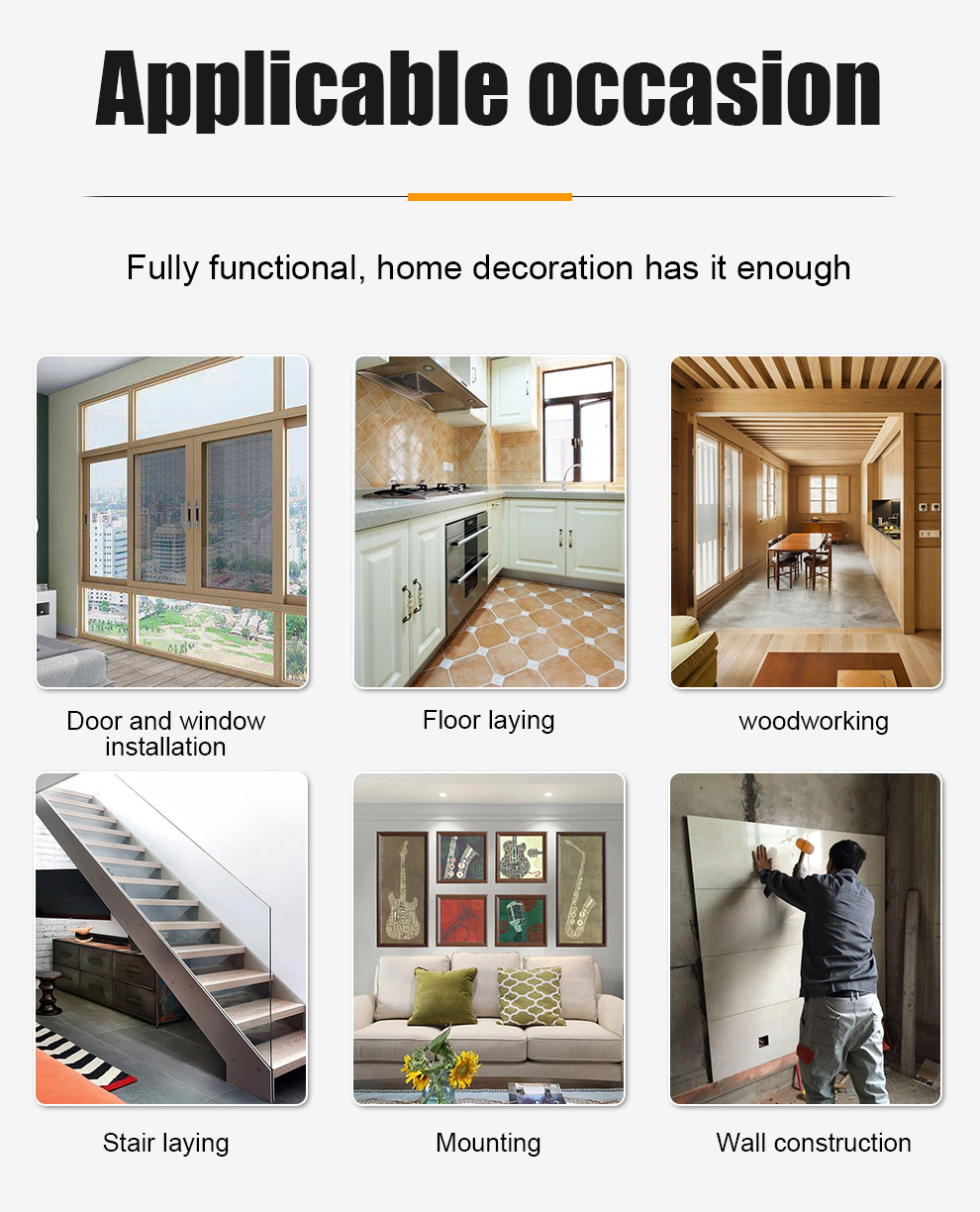
For precision tasks such as cabinet alignment, kitchen installation, or window/door framing, both red and green lasers offer the same ±2–3 mm accuracy at 10 m in NORM models. The choice depends purely on visibility need and budget.
Studies show green laser lines appear 300–400% brighter compared to red lines when measured at equal mW output. This explains most of the performance advantage green units offer.
NORM’s green laser levels achieve up to 45 meters of visible range indoors, while red units achieve 10–20 meters. These numbers are consistent across years of field testing.
Both red and green models from NORM are compatible with line receivers. Outdoors, using a detector eliminates visibility issues entirely, though green lasers still offer better unaided performance.
Both diode types have long service lives. Red lasers typically reach tens of thousands of hours of operation. Green lasers, being more complex, still achieve similarly long lifespans thanks to improved modern diode engineering.
Red and green laser levels each have unique advantages. NORM’s red laser levels stand out for affordability, battery efficiency, and reliable indoor performance, making them ideal for DIY users and small-area projects. NORM’s green laser levels excel in visibility, long-distance leveling, and jobsite brightness, making them the preferred choice for construction professionals and large-scale tasks. Ultimately, the best choice depends on your working environment, budget, and required visibility level. By reviewing the performance data, scenario-based recommendations, and technical comparisons provided in this guide, you can confidently choose the laser level that fits your needs—and ensure your next project is perfectly aligned.


